
Understanding Missouri’s juvenile justice system
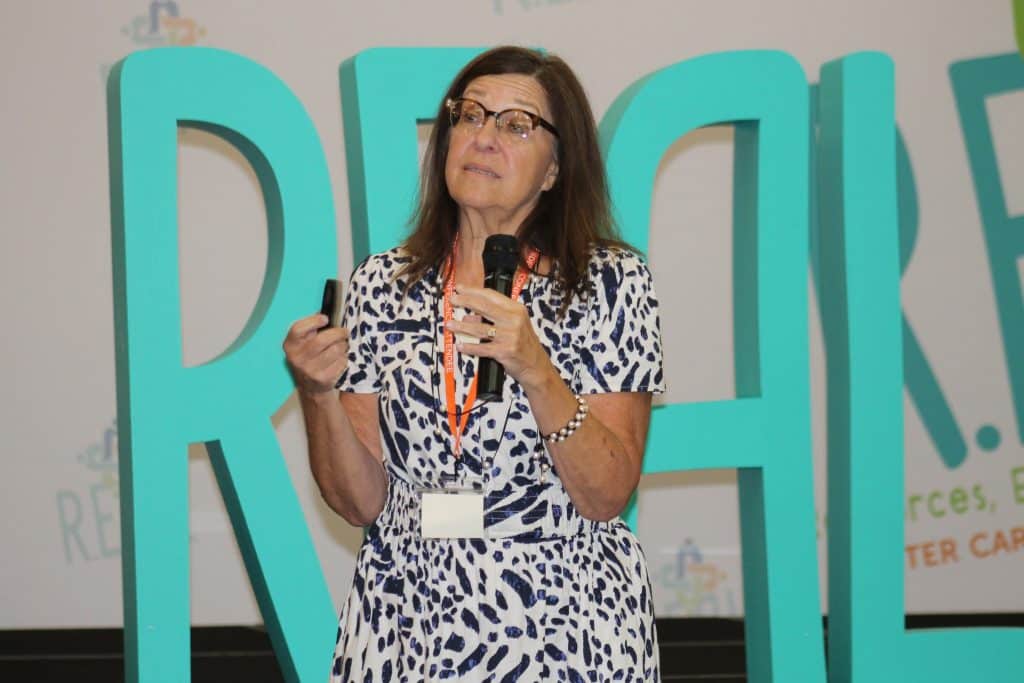
At our R.E.A.L. Conference, Tammy Walden, school response coordinator for the Missouri Juvenile Justice Association, gave an overview of Missouri’s juvenile justice and child welfare systems. Drawing from over 26 years of experience, including her work with as a juvenile officer in Missouri’s 26th Judicial Circuit, Walden provided attendees with an in-depth understanding of the legal frameworks, procedures, and philosophies that guide the juvenile justice system in Missouri.
Walden outlined the jurisdiction of Missouri’s juvenile courts, which handle a range of issues from child abuse and neglect to delinquency, adoption, and guardianship. She emphasized that the juvenile justice system is focused on rehabilitation rather than punishment, recognizing that young people are more amenable to change and growth.
A key aspect of Walden’s presentation was the distinction between delinquency and status offenses. Delinquency involves actions that would be crimes if committed by adults, while status offenses, such as truancy or curfew violations, are only offenses because of the individual’s age. Walden emphasized that juvenile officers must establish probable cause and prove beyond a reasonable doubt that the child committed the alleged act before any legal action can proceed.
Walden also addressed behaviors injurious to welfare, including self-mutilation, suicidal behavior, and drug use. These behaviors fall under the court’s jurisdiction when they threaten the child’s well-being or safety, with the system focusing on providing necessary interventions rather than punishment.
Throughout the presentation, Walden underscored the importance of constitutional protections in juvenile proceedings. She discussed the Fourth Amendment, which protects against unreasonable searches and seizures, and the Fourteenth Amendment, which guarantees due process. Walden referenced the case of Heartland v. Waddle to illustrate that the state’s right to intervene in the parent-child relationship is not absolute and must be based on reasonable and articulated evidence of harm.
The presentation also highlighted the roles and responsibilities of various stakeholders in the juvenile justice process, including the juvenile officer, attorneys, the Children’s Division, and law enforcement. Walden explained that collaboration among these players is crucial to ensuring the best outcomes for the child.
A significant part of the discussion was the role of the Guardian ad Litem (GAL), who is always appointed in cases of child abuse and neglect. The GAL operates under a “best interest” model, conducting independent investigations and reporting their findings to the court. This role is critical in ensuring that the child’s rights and interests are represented during court proceedings.
Walden concluded her presentation by providing her contact information (tammy@mijja.org, 573-616-1058), encouraging attendees to reach out with any questions or for further guidance. Her session provided a thorough understanding of the juvenile justice system and reinforced the importance of collaboration and constitutional protections in supporting Missouri’s youth.