Someone to call. A place to belong.
Someone to cheer from the sidelines. A refrigerator to raid during a visit home from college. Someone to text when the check engine light comes on.
These are some of the ways Shannon McPherson describes what family can mean as a child grows into adulthood. The big milestones matter, but so do the ordinary moments of knowing someone will be there.
For young people who have spent years in foster care, that future can feel uncertain. At Central Missouri Foster Care & Adoption Association, Extreme Family Finding® works to help children find a permanent family and reconnect with people who can be part of their lives for years to come.
Finding a family for the future
When returning to their parents is no longer possible, children need another path to a permanent home. Extreme Family Finding, or EFF, searches nationwide for living relatives while also identifying other families who may be a good fit for adoption.
“Our biggest fear is to find an adoptive placement and later learn a relative would have been open to adopting their child relative had they been notified,” said McPherson, CMFCAA’s Extreme Family Finding Supervisor.
That is why the team makes a thorough search and tries different ways to reach relatives. At the same time, looking beyond relatives gives children additional possibilities for a permanent family.
EFF brings those options to the child’s Family Support Team, which decides on an adoptive or guardianship family. The children served are often age 10 or older. The program also works with sibling groups and children with physical or mental health needs.
Keeping the child part of the process
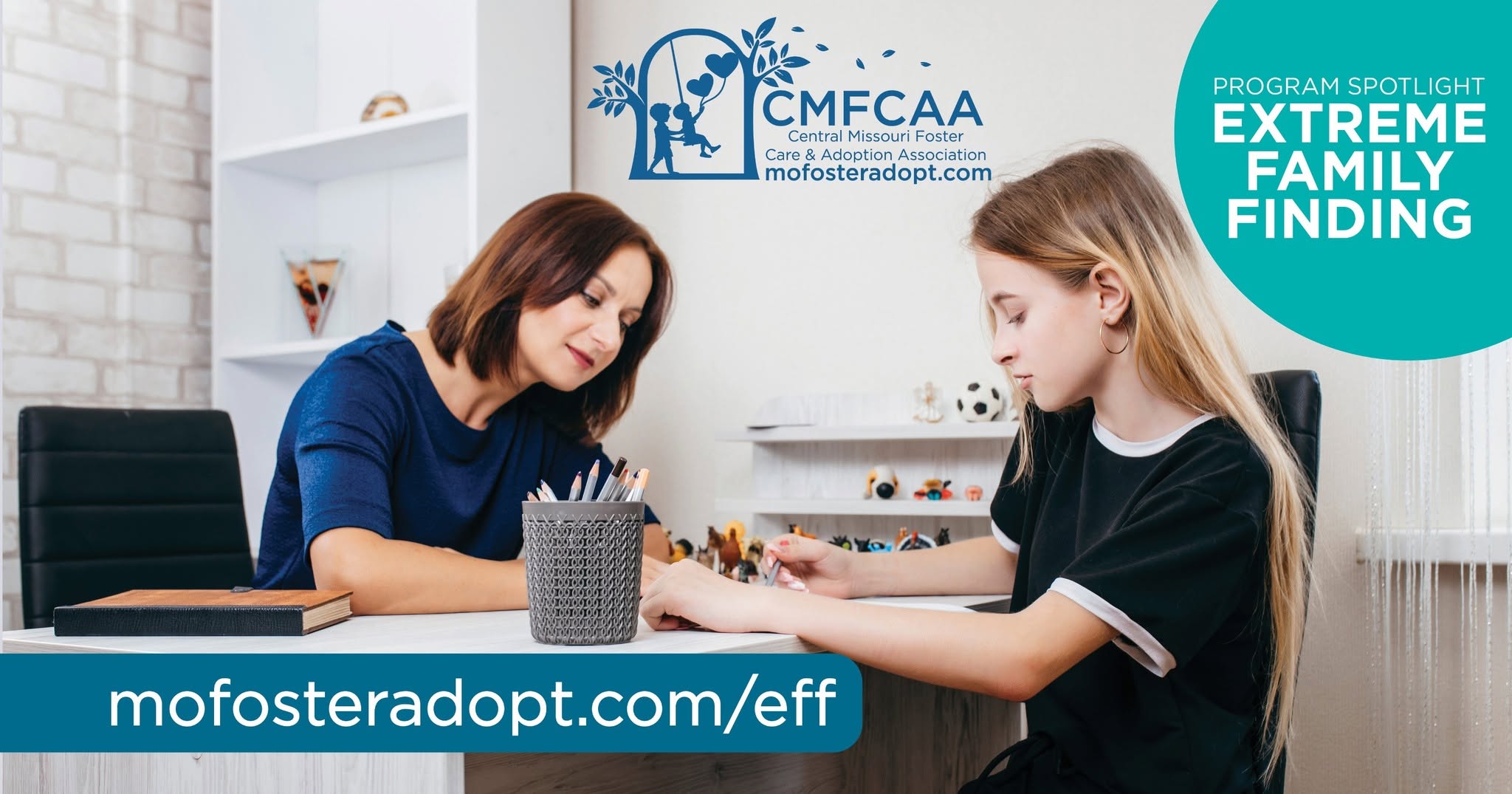
The search begins with getting to know the child. What kind of family do they hope to grow up in? Who do they miss? Who has made them feel cared for?
A young person’s answers help guide the work. McPherson said children are always part of the process, including conversations about whether a possible family feels like a good fit.
Those conversations can also lead the team to people a child has lost touch with: a Girl Scout leader who believed in them, a school nurse who offered comfort or an extended family member they remember fondly.
Moving into foster care can mean losing everyday contact with siblings, cousins, friends and familiar routines. Reconnecting with safe, supportive people can help a child keep a connection to their own history and to the relationships that matter to them.
Taking time to build safe relationships
An interested relative or prospective adoptive family does not automatically have contact with a child. The team considers safety, background information and the child’s wishes before communication or visits begin. Relatives seeking contact undergo background checks, and those hoping to host visits receive home safety walkthroughs.
“Sometimes love and safety are not the same thing,” McPherson said.
Once a family is selected, EFF helps both the child and the family prepare. The team manages the transition, locates therapeutic services and supports them as they get to know one another and build trust. EFF stays involved until adoption or guardianship is reached and the child leaves foster care.
McPherson also wants people to understand that children do not have to resolve every struggle before they can belong to a permanent family. Uncertainty and fear can affect how children cope. A consistent, loving home, along with the right support, can help them begin to feel secure.
Support that continues into adulthood
For EFF, success means a child leaves foster care with a permanent family. Along the way, reconnecting with other caring adults can give that young person more people to turn to, whether they need help, encouragement or someone to share good news with.
“Like everyone, they need someone to talk to when they have had a hard day or are celebrating a big win,” McPherson said.
Those needs continue long after childhood. Every young person deserves the chance to grow up knowing they have people who will keep showing up.
Learn more about Extreme Family Finding at mofosteradopt.com/eff